The Business of Awe
// Acatenango, Guatemala //
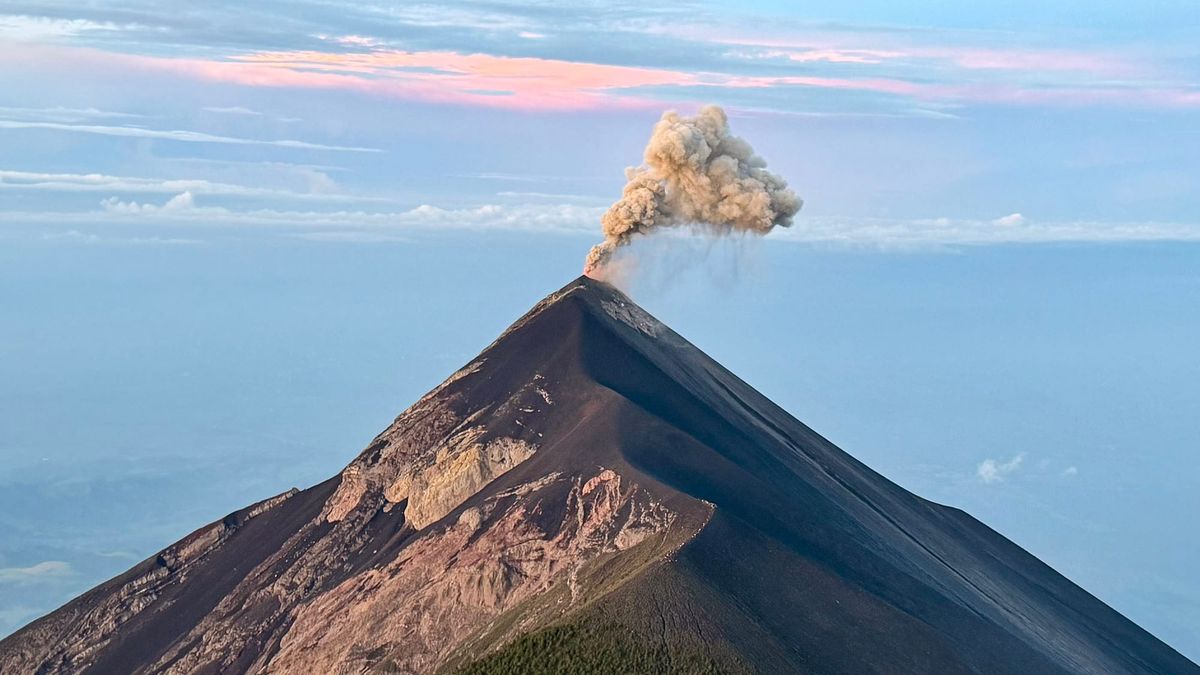
I was lying in a bunk bed inside a plywood cabin perched on the side of a dormant volcano in Guatemala. Around two in the morning, I awoke as the cabin shook around me. Out the window, the sky was amber. A sound reverberated through the air, like someone dropped a massive sheet of metal somewhere deep in the surrounding forest. I sat up and saw a wondrous sight: a view of Volcán de Fuego actively erupting.
Every few minutes, the volcano pulsed orange against the dark night sky. A fountain of glowing rock shot out like fireworks before disappearing into the pitch blackness.
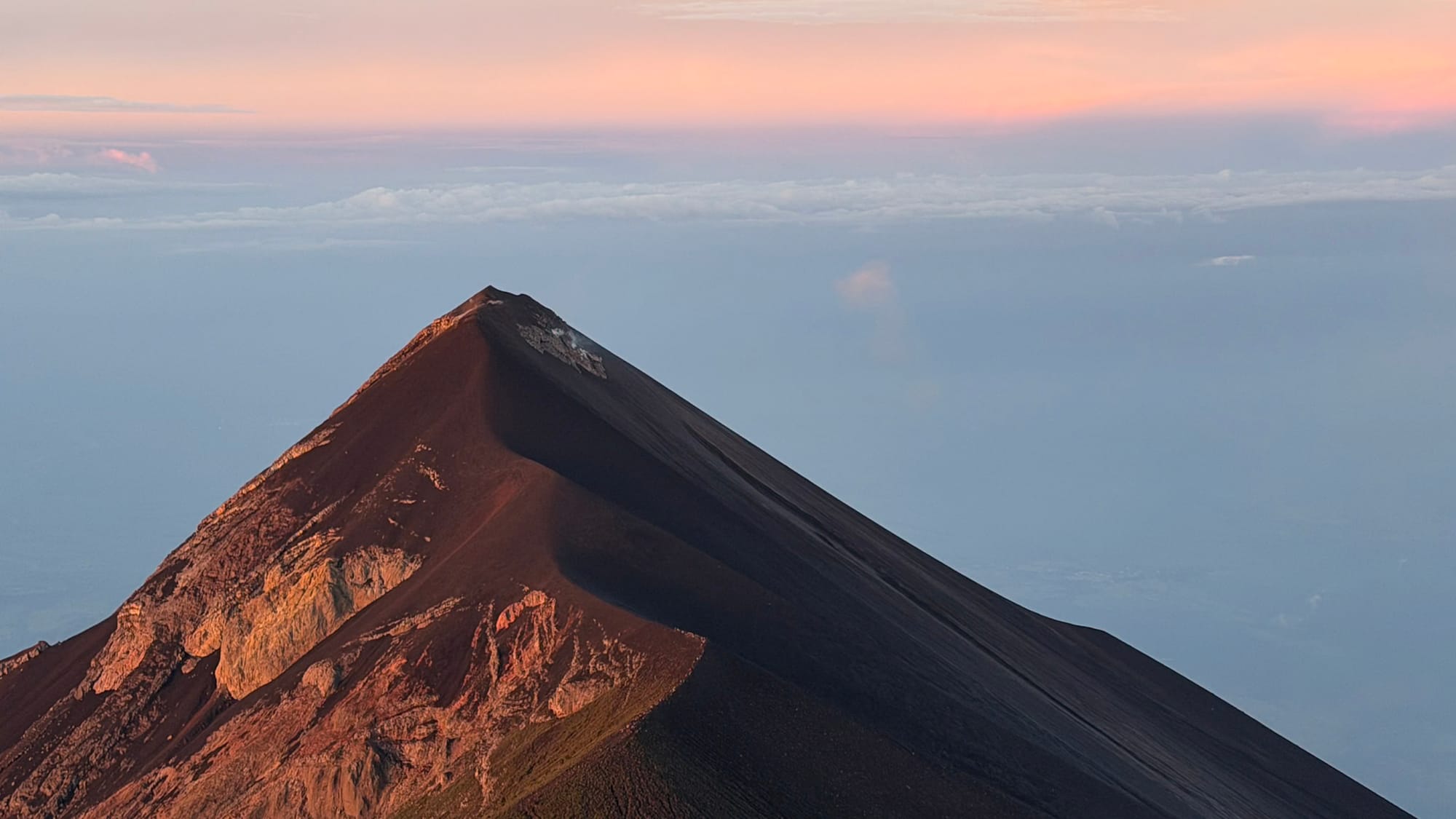
Four hours later, after perhaps 15 minutes of sleep, I stood on the summit of Volcán Acatenango, Fuego’s long dormant neighbor. I watched as sunlight drenched Fuego and witnessed an eruption in the beginning moments of the day.
It sounds surreal, and it was, but it was also very crowded.
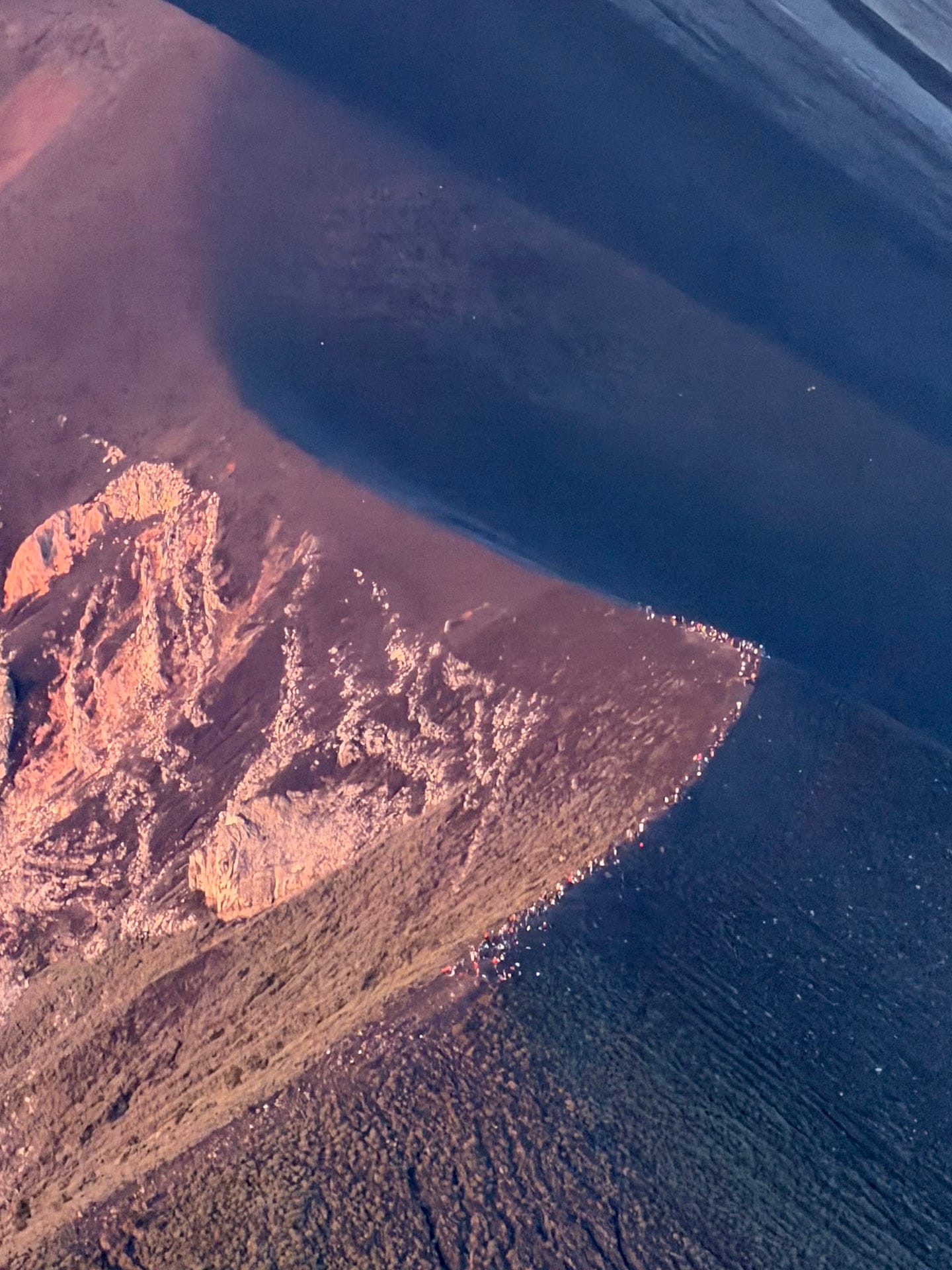
On Acatenango’s crater rim, I was one of nearly five hundred people watching the morning eruption. Phones rose above heads. Guides shouted to keep group members from wandering off. Drones buzzed overhead.
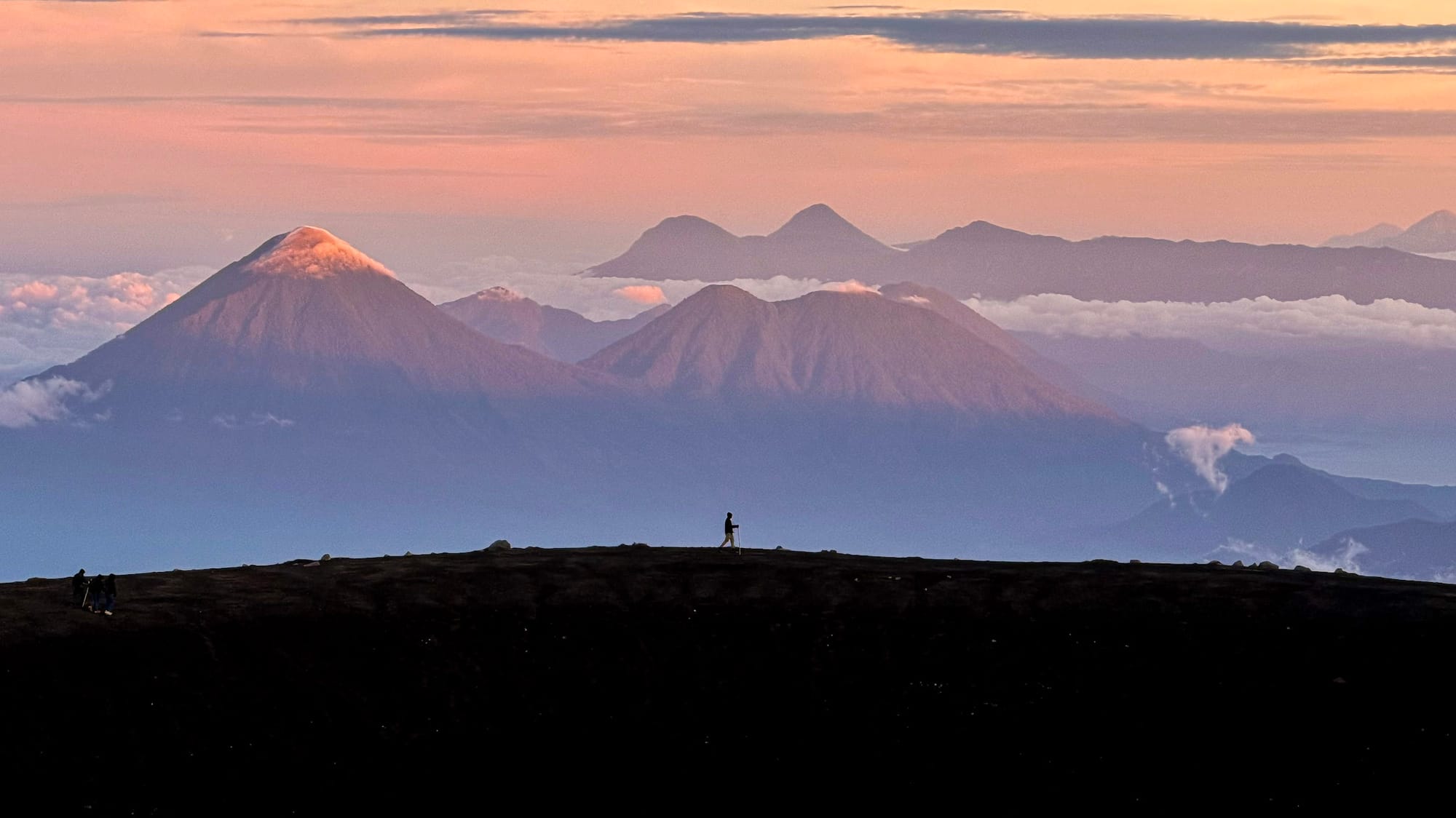
I became frustrated. Somehow, during the preceding weeks and even during the climb, I had convinced myself that I would have a private encounter with something immense. Rather than some spiritual encounter with nature, the summit felt like a stadium, with Fuego the main act. Every photograph seemed to include a shoulder, another phone, or someone else trying to take the exact same photograph.
But we all worked to get there. Each of us deserved to experience it, right?
The previous morning, each of us had woken up in Antigua and made our way to a predetermined meeting point, where one of dozens of tour companies waited to shuttle us to the trailhead. I found the companies were largely interchangeable. Each promised incredible views, experienced guides, hearty meals, and a commitment to safety.
At the trailhead, hikers spilled from a procession of minibuses. The trail was a queue. When one group stopped to catch its breath, another tried to squeeze past. Like rush hour in a metropolis, there were bottlenecks, overtakers, a fast lane, a slow lane, accidents, and irritability.
And of course, to move such a metropolis was the economic engine powering it. Along the route, vendors sold candy bars, Gatorade, instant coffee, fresh fruit, and hot meals. Porters climbed past carrying propane tanks, mattresses, crates of food, and supplies for the camps above.
The climb itself was no joke. It was nearly 4,000 vertical feet of loose volcanic ash and dirt, with long stretches approaching a calf-burning forty-five-degree grade.
I caught myself getting annoyed every time another group rounded a corner. I wanted solitude, but I also wanted to be there.
The annoying contradiction became obvious. Every frustration I had about Acatenango could be explained by one additional hiker: me.
It is difficult to determine how many people climb Acatenango to watch Fuego erupt each year. There’s no official visitor census that is published, but all the signs point to exponential growth. In 2024, Guatemala saw roughly 15% more international visitors than 2023, and Acatenango reigned as the premiere attraction. Tour companies say that they take thousands of clients up the mountain annually. Certainly my experience seems to corroborate that.
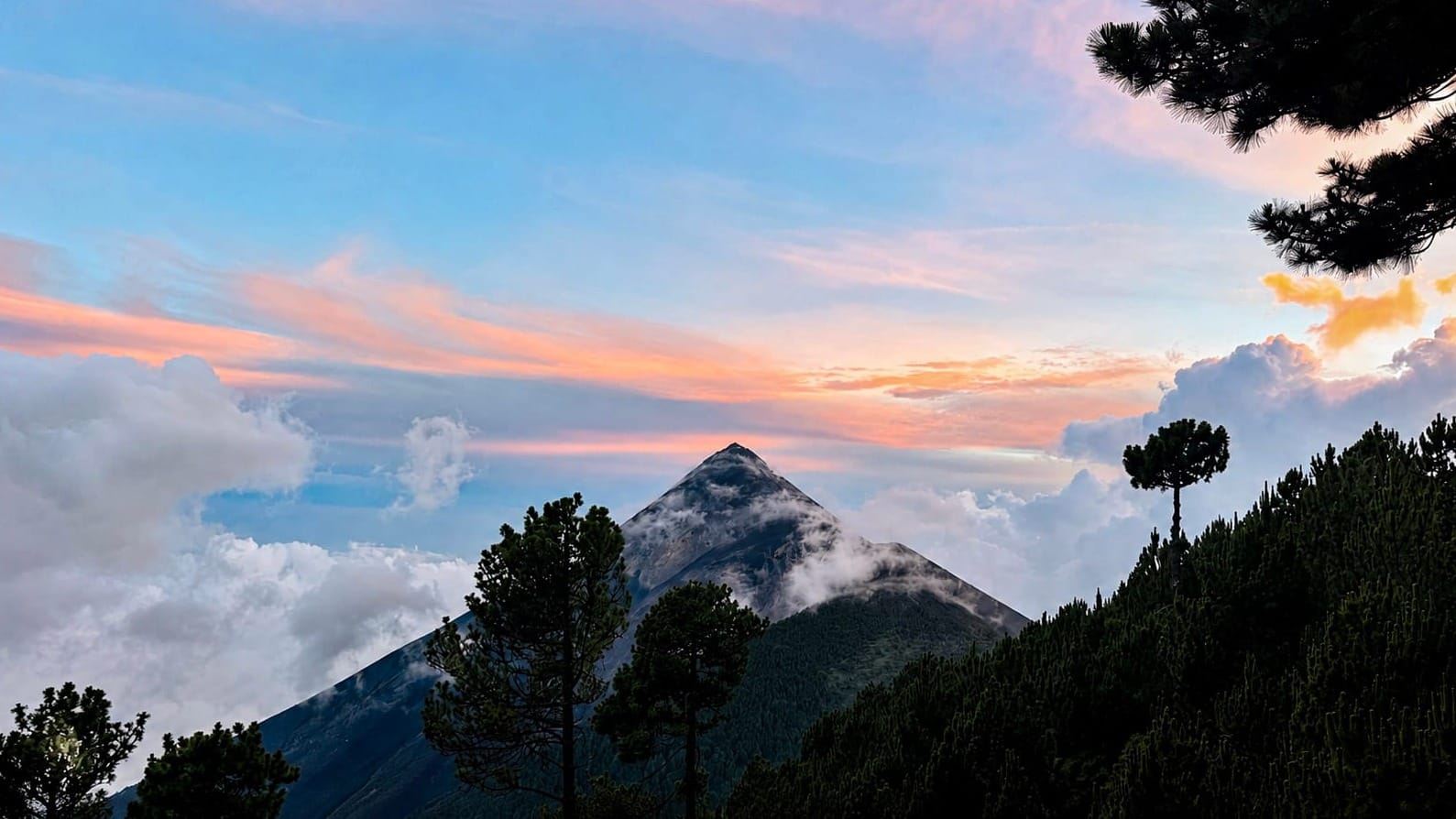
That growth raises questions when considering the risks involved. The primary hike is up Acatenango, but there is an optional hike up Fuego itself. Even without approaching Fuego, the climb has hazards. There’s the altitude, biting cold, exhaustion, falls, and sudden changes in weather. The optional hike toward Fuego's saddle is another matter entirely. Guatemala's national volcanology agency, INSIVUMEH, has repeatedly advised visitors not to hike up Fuego. Volcanologists have similarly warned that repeated exposure of large groups to an active volcano makes a serious accident basically inevitable.
Yet, tourism has become an essential source of income for the local communities. Guides, porters, drivers, cooks, equipment renters, vendors, and hostel owners all depend on hikers like me. Several times on the hike, I found myself adding up all the revenue generated by the hundreds and perhaps even thousands of people.
None of this is simple.
The tourism that floods the trail also creates livelihoods.
Standing on the summit of Acatenango, I couldn’t shake a few questions. I came because of the photos I saw, and so did probably every other person standing beside me. None of us were doing anything wrong, per se. But what happens when a place becomes famous for inspiring awe?
What does it mean to seek awe in a place that is slowly being consumed by our collective desire to experience it?